Εμφάνιση αναρτήσεων με ετικέτα weather. Εμφάνιση όλων των αναρτήσεων

30.3.09

Carnival in Skyros

Like last year, I chose the island of Skyros to spend the three-day holiday of Καθαρά Δευτέρα (the Orthodox Lent) which is celebrated together with Αποκριά (Carnival). Having spent successive years in the past going at my origins village outside of Rio (close to Patra) and being pissed off by the commercialization and degradation of the country 's biggest urban carnival, the option of Skyros has emerged well into my annual calendar: close to my native town, Χαλκίδα, dense ferry schedules, and plus, my buddy, who 's serving as a doctor in the island 's tiny hospital.
The island is a personal must; it has many things I adore: a jagged landscape, diversified with forested areas in one side and rough treeless slopes on the other, local folk traditions continuing strong and a very vivid, deeply pagan carnival with loyal fans.
Until the last moment, there was a small debate between me and my companion of going there or not, since the weather forecast for the holiday was quite bad. My initial plans were to go there by motorbike, but F. 's strong objection made me take my car.
The route from Athens to the ferry port of Kymi was changing continuously from rain to sunshine in a very frequent rate, though very scenical and picturesque. When reaching Kymi, the ferry agent informed us that in the hearing of the bad weather, there were some passenger car tickets cancelations which gave us the opportunity to bring the car to the island and thus relieve us of some 70 euros from our pockets.
Shortly after the fully-packed ferry 's got off the Kymi port to the open sea, it started braving a gale-force wind accompanied by thick and wet snowflakes, ramming onto the deck, making everybody in the gallery staring with an open mouth. The ferry 's deep banking was making the passengers unrest but nontheless, remaining very talkative and loudy. In the distance, the snow-powdered lower altitudes around Kymi were revealing a very unusual scenery for us the people of the cities, but not uncommon for the local, both mainlanders and islanders. In about 10 minutes, the storm ended and a hopeful sun appeared; it was the only bad weather to appear for the whole of the holiday.
The Carnival: The sight of Γέρος, the prominent figure of the sheepherd in black, thick wollen cloak, the 40-50 sheep bells strapped around his waist whom shakes and creates a thunderous noise, as if to scare away the goblins. He covers his face in a mask of an aborted tiny goat skin. The whole sight looks awesome and makes the passers step aside to let him pass, being ecstasized of the enormous noise of the bells created by jumping here and there in the narrow cobblestone streets of the island 's capital. Often he is accompanied by a Κορέλα, a man (or recently a role played also by a woman) dressed in the island 's traditional dress with the face covered by a scarf dancing around him and waving another one. It is said that the figure of Γέρος is apparently a shepherd that most possibly lost his sheep in a storm, gathered their bells and coming down to his cottage in sadness and anger and Κορέλα tries to comfort him. The celebrations reach their peak on Sunday, where 20-30 Γέροι and Κορέλες can be seen gathered together, grooving in ecstasy and shaking their bells and us the tourists taking pictures of them. It is very interesting that almost the same tradition appears in the Mamoiada village in Sardegna, where the Mamuthones in almsot very similar outfit are striking their bells: http://www.museodellemaschere.it/museo.htm and http://www.stonepages.com/sardinia/sites/mamuthone.html
The Lent is another surprise: all of the people were down on the streets, having put tables, eating, drinking and treating the passers, knwn or not, from early midday to midnight and even later. Almost every local was dressed in the traditional costume, I even noticed some British and Dutch women wearing it! What I liked at most was the friendliness of the people and a common sense of celebration, no just another boring visit to an uknown place, just waiting for the next week to start.
I also visited the Rupert Brooke 's grave in the southern part of the island, a young British pro-war poet perished by malaria and buried there, while en route to Galipoli, scenery of the notorious 1st World War battle, while serving as a soldier. The grave lies in a small olive grove and can be passed almost unnoticed: no signs, no path, nothing; unless told so by the young guard of the military base, not far away from there.
Up on the hills, close to Brooke 's grave, a small heights meadow with a pond had attracted our attention: some of the famous Skyros dwarf-horses had come down off the mountain to relieve their thirst. Wild as hey are, they couldn 't accept our presence, and after we got too close, they fled. Hopefully, I managed to take some pictures of them, thanks to my 300mm telephoto lens.

6.10.08

Σαββατοκύριακο στη Γκιώνα

Εδώ και 2 εβδομάδες περίπου, είχα αποφασίσει να συμμετέχω στην εκδρομή του ορειβατικού συλλόγου στη Γκιώνα. Η εκδρομή περιλάμβανε σύντομη ανάβαση 1-1,5 ώρας από τα Μνήματα στη Βαθιά Λάκκα το Σάββατο, διανυκτέρευση στις σκηνές και την επόμενη διάσχιση του ρέματος της Ρεκάς, αφήνοντας την Πυραμίδα της Γκιώνας δεξιά. Ένας τελευταίος έλεγχος σε επιλεγμένες διαδικτυακές σελίδες του καιρού το πρωί του Σαββάτου, για να σχηματίσω την (προσωπική μου) πρόγνωση για τις παρακάτω συνθήκες (μιλώντας για πάντα τις "αστικές" και υπαίθριες" προγνώσεις, αγνοώντας την αστάθεια και αδυναμία πρόβλεψης του καιρού σε ένα βουνό): επέλαση μετώπου κακοκαιρίας το βράδυ Σαββάτου προς Κυριακή από δυτικά προς ανατολικά στο ύψος της Κεντρικής Ελλάδας με έναρξη βροχόπτωσης στο διάστημα 00:00-03:00 Σαββάτου προς Κυριακή και στη συνέχεια ισχυρούς ανέμους κυρίως στην Ανατολική Ελλάδα με μεγάλη πτώση θερμοκρασίας.Άφιξη στην αρχή του μονοπατιού: 13:00 Σαββάτου. Ξεκίνημα πεζοπορίας: 14:00. Φτάσαμε στο σημείο που θα διανυκτερεύαμε κατά τις 16:00, σε ένα μικροσκοπικό λιβάδι λίγο πιο κάτω από τη Βαθιά Λάκκα και μεταξύ της και της κορυφής Βούτσικα, με τον καιρό πολύ συννεφιασμένο με αρκετό κρύο και αέρα. Μόλις στήσαμε σκηνές, άρχισε η βροχή, κατά τις 17:00. Μπήκαμε στις σκηνές και τσιμπήσαμε κάτι λουκάνικα, τυριά, ψωμιά κτλ. Στις 19:00 σταμάτησε η βροχή και οι υπόλοιποι που δεν είχαν φάει, έβγαλαν τα καμινέτα και τις κατσαρόλες έξω, όπου πλέον είχε αρχίσει να κάνει ακόμα περισσότερο κρύο. Ο Πέτρος και εγώ (υπήρχε και η Βάσω, η τριάδα της σκηνής μας) που μέναμε στη σκηνή μαζί, πέσαμε για ύπνο, ναρκωμένοι από το φαΐ και το κρύο. Η Βάσω έκανε παρέα στους υπόλοιπους που έτρωγαν έξω. Κατά τις 22:00 αρχίζει μια καταιγίδα με αέρα (αλλά ευτυχώς χωρίς κεραυνούς), η οποία σταμάτησε περίπου στις 01:00 προς Κυριακή. Αλλάξαμε τη φορά που κοιμόμασταν (δεν είχαμε κοιμηθεί σχεδόν καθόλου) για να μην τρώμε στα μούτρα τη σκηνή που λύγιζε από τον αέρα. Πλέον όμως το χώμα είχε μαλακώσει πολύ από τα καντάρια νερού που έπεφταν και τα πασαλάκια ήταν πολύ λεπτά για να κρατήσουν τη σκηνή στον αέρα. Τότε ο Πέτρος ντύθηκε και βγήκε έξω, προσπαθώντας να ξαναστήσει όπως μπορούσε τα διάφορα μέρη που έφευγαν, με τη βοήθεια του Βασίλη ο οποίος ήταν σε εγρήγορση, εν όψει της προετοιμασίας του για το Aconcagua, στο οποίο θα προσπαθήσει να ανέβει τον Ιανουάριο. Παρέμεινα μέσα προσπαθώντας να συγκρατήσω με το βάρος μου τη σκηνή, την οποία δεν στήριζε πλέον σχεδόν τίποτα, μέχρι να τη συμμαζέψει. Κατά τις 02:00 περίπου τελείωσε, μπήκε μέσα και κατάφερα να κοιμηθώ επιτέλους για 2,5 ώρες, η μοναδική ώρα που κοιμήθηκα κατά τη διάρκεια της παραμονής μου εκεί. Ο ύπνος κράτησε μέχρι περίπου τις 04:15, οπότε πλέον οι πανίσχυρες ριπές του ανέμου είχαν αρχίσει να κάνουν τη σκηνή έρμαιο του ανέμου και του χιονόνερου που έπεφτε κατά διαστήματα. Ο άνεμος πρέπει να είναι μάλλον ο χειρότερος που έχω αντιμετωπίσει, ίσως ο καιρός της Ισλανδίας να τον ξεπερνούσε, και αυτά όχι σε κάποιο δεδομένα δύσκολο, ψηλό βουνό της χώρας και του εξωτερικού, αλλά σε υψόμετρο μόλις 1800 μ. Ο αέρας λυσσομανούσε σα δαιμονισμένος. Τα βράχια που υψώνονταν λίγο πιο πίσω μας, προσφέροντας κάποιο ελάχιστο απάγκιο (;) μούγκριζαν από τον αέρα σαν τζάμπο σε απογείωση. Στη συνέχεια, μόλις ο θυελλώδης δυτικός άνεμος υψωνόταν από την Πλάκα της Συκιάς μερικές δεκάδες μέτρα, κατέβαινε σαν βόμβα προς τα κάτω, προς τη μικρό λιβάδι που είχαμε κατασκηνώσει. Η οροφή της σκηνής στις ριπές κατέβαινε μέχρι τη μούρη μας, χτυπώντας μας με τις μπανέλες διαρκώς. Πλέον ο ύπνος ήταν αδύνατος. Δυστυχώς έπρεπε να υπομείνουμε τη διαδικασία αυτή μέχρι το πρώτο φως της ημέρας, οπότε και να πάρουμε το δρόμο της (άτακτης) επιστροφής. Κατενάτσιο δηλαδή, μέχρι πρωίας, με την κατάσταση της σκηνής να επιδεινώνεται και το ηθικό μας να πέφτει συνεχώς, τυλιγμένοι μέσα στους υπνόσακους μας, προσπαθώντας να μείνουμε τουλάχιστον στεγνοί και ζεστοί. Περίπου στις 05:30-06:00, ο αέρας είχε πλέον ξηλώσει το κάλυμμα της σκηνής, κάνοντας το καραμπίνερ με το οποίο κράταγε η Βάσσω το κάλυμμα, άχρηστο. Αφού κάποια φραστική αντιπαράθεση μεταξύ εμένα και της Βάσσως είχε αρχίσει σχετικά με τη διαχείριση της κρίσης, μάζεψα όπως-όπως τον υπνόσακο και αναζήτησα κατάλυμα στη σκηνή του Μενέλαου, προσπαθώντας να ανακτήσω δυνάμεις για το κακήν-κακώς μάζεμα και επιστροφή. Νομίζω ότι πρέπει να κοιμήθηκα για 10-15 λεπτά, και βλέποντας το φως να ξημερώνει έξω, σηκώθηκα και πήγα στη σκηνή, παρακινώντας τον Πέτρο να σηκωθούμε να φύγουμε. Η σκηνή μας πλέον είχε γίνει γιρλάντα. Δεν υπήρχε σημείο που να μην έχει σκιστεί, οι μπανέλες στραβωμένες από τα αλύπητα χτυπήματα των ριπών του ανέμου, ολόκληρο το βράδυ. Ήμουν πλέον 14 ώρες μέσα στο αντίσκηνο και τα νεύρα μου είχαν σπάσει, μη μπορώντας να το κουνήσω ρούπι από το αγιάζι. Μέσα σε 10' τα είχαμε μαζέψει και εξαφανιστήκαμε στο μονοπάτι της επιστροφής, τρεκλίζοντας και παραπατώντας εν μέσω εκρηκτικών ριπών και ελαφρού χιονόνερου.
Μόλις φτάσαμε, κοινή συνισταμένη και των τριών συνοδοιπόρων (στο βουνό και στο δρόμο) ήταν να βρεθούμε στα σπίτια μας για ξεκούραση το συντομότερο δυνατόν. Εκτός από μια στάση στην Άσκρη Βοιωτίας για να χαιρετήσουμε τον πρώην πρόεδρο του Συλλόγου, πήγαμε καρφί στο Σχηματάρι για να πάρω το αυτοκίνητό μου. Πήγα στους γονείς μου στη Χαλκίδα και έπεσα εξαντλημένος για ύπνο. Ξύπνησα στις 22:30, αλλά τα πόδια μου δε με βάσταγαν και πολύ και έτσι ξαναπεσα για ύπνο, ξυπνώντας κατά τις 06:45 (χωρίς ξυπνητήρι) για να πάω στο γραφείο, σχεδόν απ' ευθείας από Χαλκίδα.

17.9.07

Waterspouts

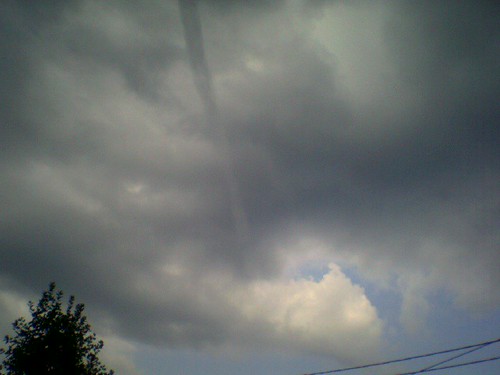
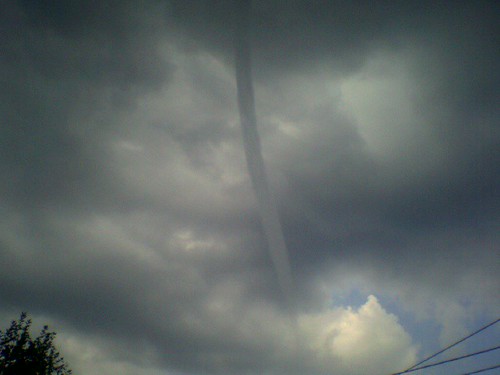
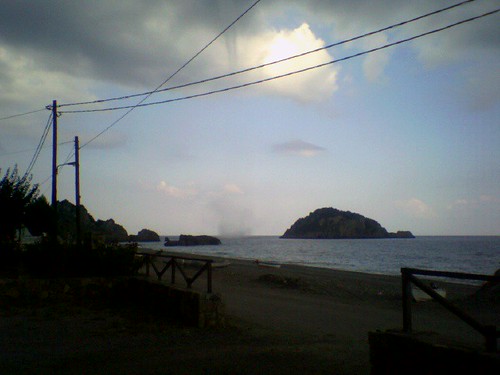
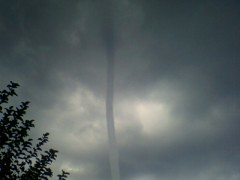
As Sunday dawned and the whole country prepared to elect the same irresponsible politicians, I received an MMS from my sister who was camping at Chiliadou beach, with the snapshot of a beautiful waterspout approachingthe coast, in the Aegean side of the island of Evia. A slight drizzle and high humidity had preceded the appearance of this tube. Unfortunately the only pictures I have in my hands are the ones from my sister 's mobile. As a fellow amateur meteorologist Angelos from the Hellas Weather mailing list reported from Dirfis plateau that the clouds base was very low and drizzle was reported also. This matches well with with the conditions down in Chiliadou beach, just 15 km away in straight line. The tube spinned a few dozens of meters away from the coast and when it touched it, it dissappeared in the clouds, as some divine hand picked it up again in the gray skies. It is usual, as when it reaches the much drier land, it loses its primary feeding ingredients: moisture and heat. Of course, Greece is not as famous as the Great Plains in the States for its waterspouts and tornadoes. And of course not so deadly as they are there. Statistically speaking, more tornadoes are observed in the Mediterranean basin than in the Great Plains, but in contrast they are harmless.
Waterspouts are not unusual in Chiliadou; they were observed once again in June '06.
Enjoy!

21.5.07

Weather instability


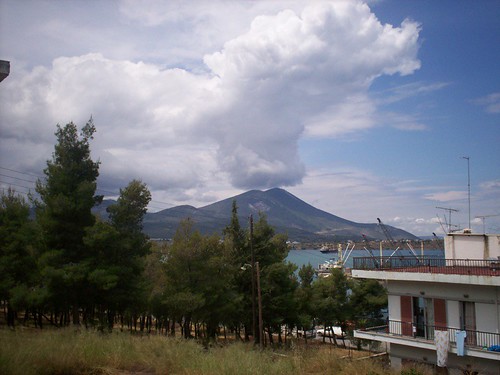
Last weekend I shot this nice Cumulonimbus (Cb) cloud hovering above the low mount of Htypas (~800-900m) over my hometown of Chalkida. Happily, after my sister 's logs mentioned that the last drop of rain having fallen on April 4th (as a tennis instructor, Katerina keeps a log book with the days not having worked because of rain), the rainy weather was highly anticipated, especially after the last weeks' heat.
All weekend was in very unstable weaher conditions. While in one region of the country was cloudy for the most of the day, some others were experiencing light rain, heavy rain with lightnings and some others, hail. Even these local conditions varied a lot just a few kilometers away: Chalkida 's center received 14mm of rain during the weekend, 1,5 km away this dropped to 10,5mm, while the Vasiliko region 10km to the south- east of the city, scored just 4 mm of rain. If one was able to look the precipitation forecast of Poseidon or meteorologia.gr, he could describe the map as if the country had got measles on the face, such were the colours describing the rain over Greece.
The instability is typical on spring time, because the now-warming masses of air are still trying to replace the cool ones very rapidly, while the earth 's capacity has still a lot of cold to give. Another usual phenomenon as the warm air begins to penetrate more and more to northern latitudes, is the drift of huge sand clouds from Sahara desert above the Meditteranean that easily reach the coasts over Southern Europe, creating muddy rain and mud-stained cars (and Vespas, of course).